
Three Paths to the Immersion Year: A Conversation with Becky, Ida and Sofia
Becky Brock, Ida Rosén and Sofia Wallner are half way through their Immersion Year. Michael DeVore sat down for a conversation about what got them into drawing and painting, what inspires them and their future plans.
Three Paths to the Immersion Year: A Conversation with Becky, Ida and Sofia
Becky Brock, Ida Rosén and Sofia Wallner are half way through their Immersion Year. Michael DeVore sat down for a conversation about what got them into drawing and painting, what inspires them and their future plans.
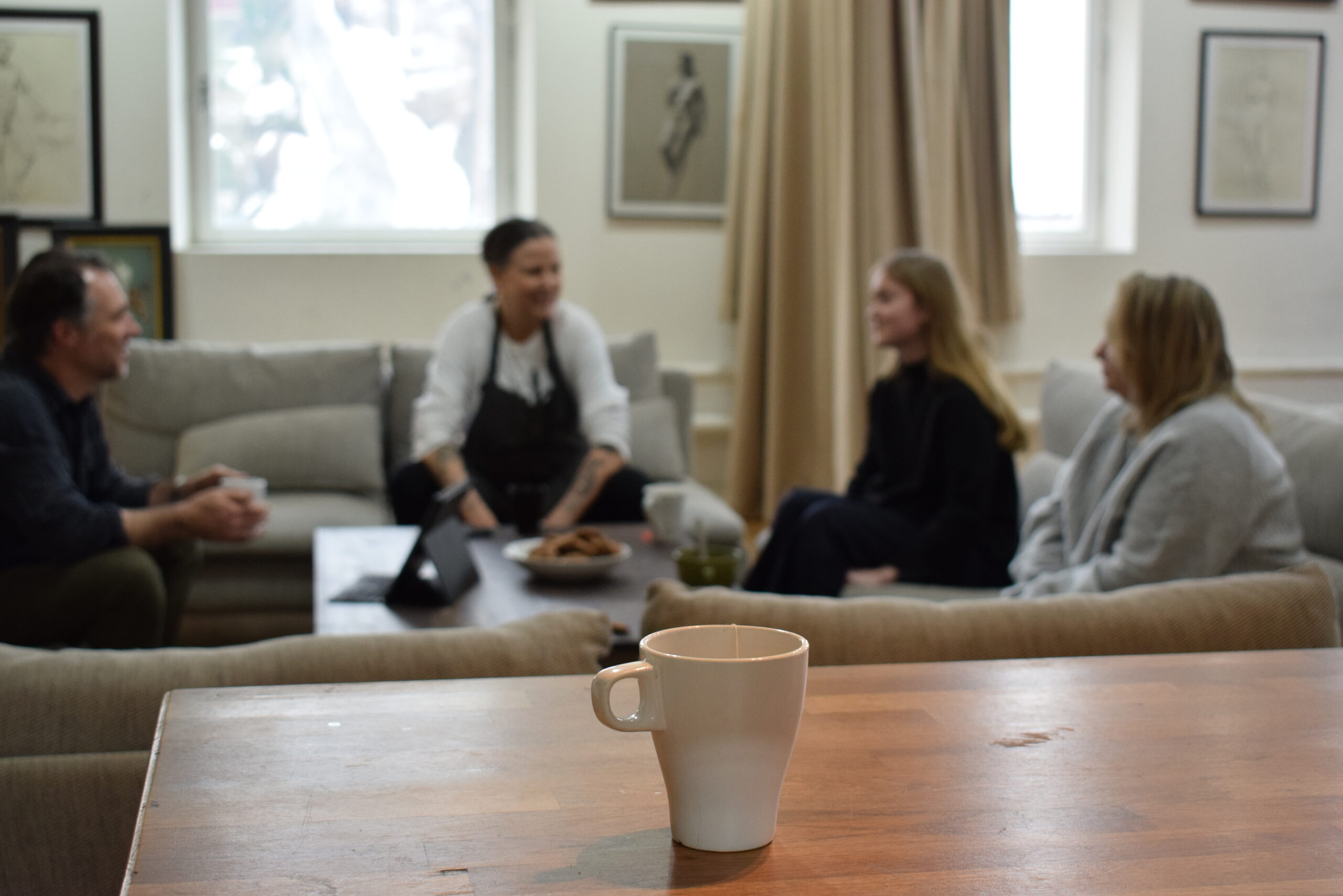
Michael DeVore: You’re the first group of academic immersion year students we’ve had, and I want to learn about your backgrounds and experiences. So tell me a little bit about yourselves. When did you discover you had a serious interest in art?
Becky Brock: I’ve always had a big passion for art, even when I was little. My earliest memory is of making a pinch pot in kindergarten and smashing it, and then sobbing my eyes out and ever since that, I’m like: I love art.
When I was in high school, I went to a gallery in Utah and I saw several pieces from Kamille Corry and I fell in love with her work. When I saw Kamille’s work, I had no idea how she did it, that’s when I realized I wanted to be an artist and really learn those types of techniques and composition.
Ida Rosén: Well, difficult question. I’ve always liked drawing. I’ve just always been interested in aesthetics; architecture, fashion, crafts and especially drawing. As a child that was very accessible. Drawing has always been something that you can do with just a pen and a paper or a book, like in the margins of a school book.
Sofia Wallner: I was 13 years old and we were allowed to do an apprenticeship. There was an art director where I lived, so I followed him for a whole week and I drew him and I wrote about it. And back then there was a lot more handcraft involved. So that’s when I knew that I wanted to work with art, but in art communication.
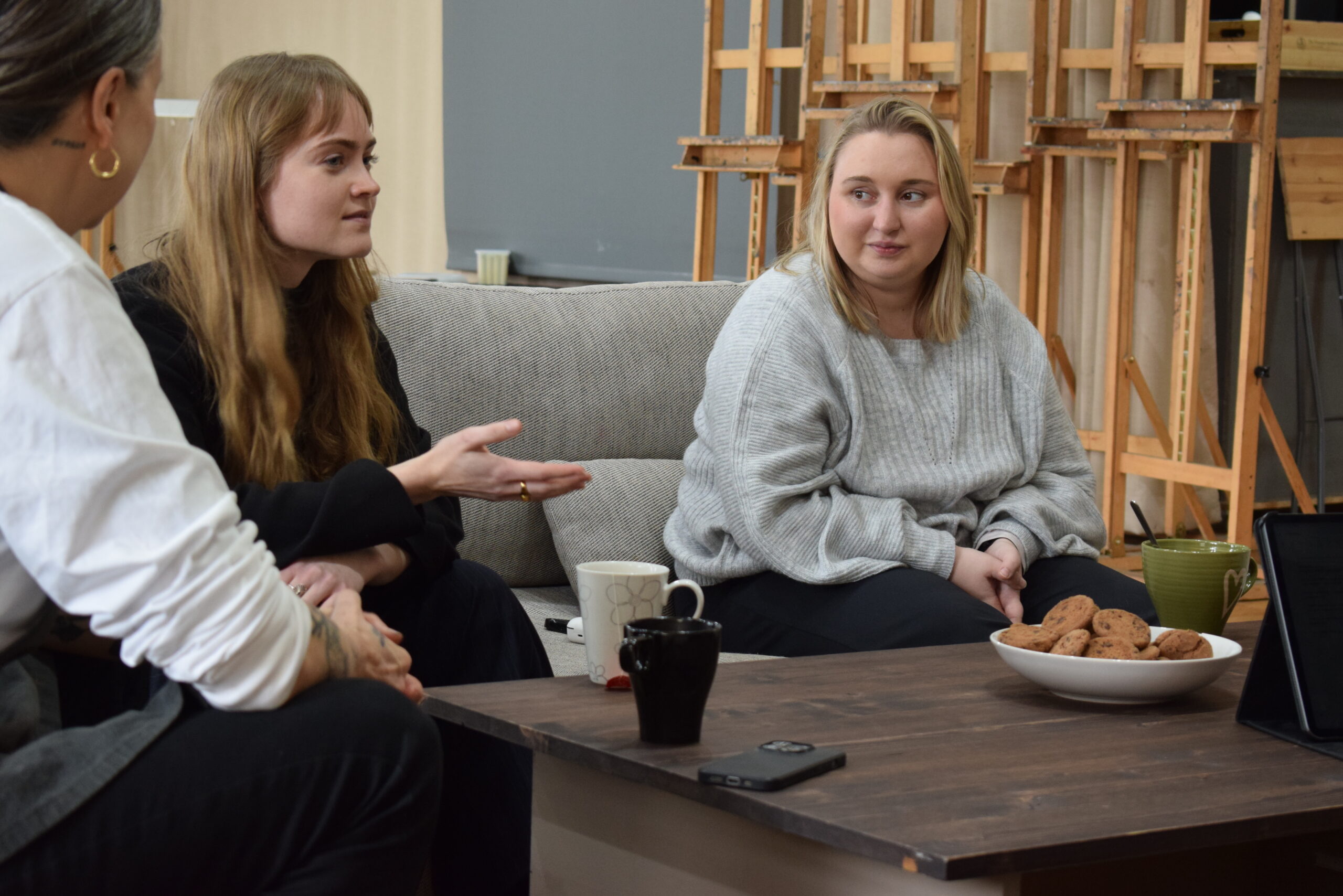
MD: Before coming here, did you study art in school, take lessons, or did you study independently?
BB: I graduated with a Bachelor of Fine Arts in Painting and Drawing, and minor in Art History but didn’t feel I really received the training I was looking for. I learned to manage timelines, meet deadlines and received a broad, well rounded liberal arts background, with many invaluable experiences.
To augment my drawing and painting education, I also attended three different ateliers before FAA, completing many Bargue and cast drawings, but for different reasons was never able to complete the full three to four years of training. So I have a lot of “beginning experience” at ateliers.
I have taken a number of 1-week workshops, which I found helpful, but they were 1 week and there wasn’t any continuity. After attending the 8-week program and being accepted to FAA, I chose the one year program so I could accelerate through the initial phases of the program and focus on the middle and ending phases of a multi-year atelier program. My goal is to spend several years at FAA, and complete the full atelier curriculum by leveraging the one year program and working with the instructors to customize each year for my particular educational needs.
MD: I was also an art major and so I took art history and things like that. Even if it’s stuff that maybe you’re not naturally as interested in, when you go to museums you say, oh, I know about this. It does make it more interesting to see those things and know the history behind them. You can appreciate art in different ways as well.
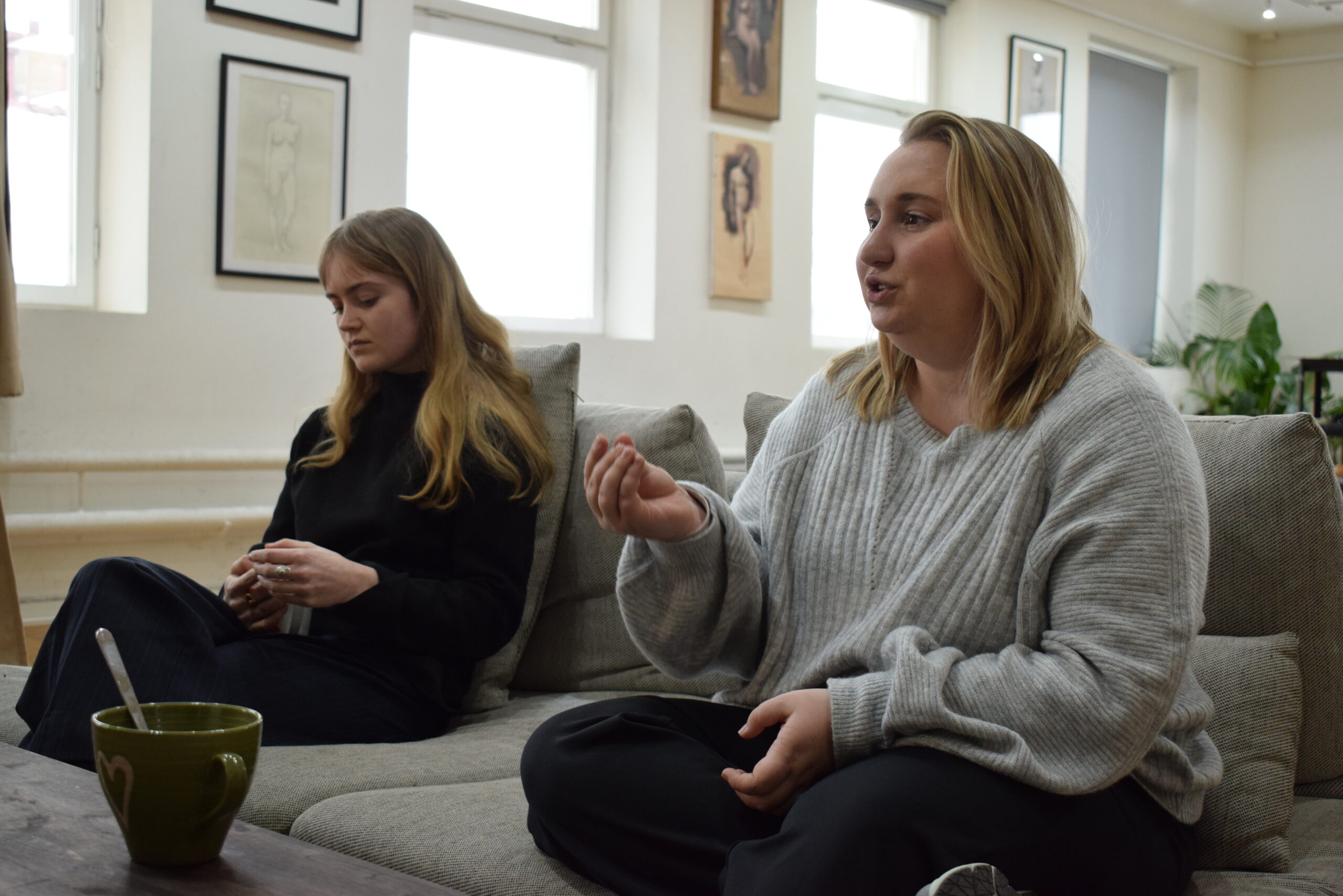
IR: Like Sofia, I kind of had a similar experience. I never thought of art as something you could work with. And I think that was the reason why I never looked into art as a subject of serious study. When I was younger I looked into some of the colleges that offered art as a subject, but I never found this type of school. I wasn’t really interested in going to school to learn how to express myself, I wanted to learn how to draw and paint things realistically.
I have taken some short courses, but wanted to explore a bit more. And then, I saw this advert for a course in Scotland. It was a five day course with a woman who had gone to Florence Academy, in Florence. And I really liked it! She recommended the school here.
Sofia: I had an aesthetic version of high school, so it was art history already there. When I was 18 or 19 years old or so, I had a year where I only painted and lived in Ireland. It was a good experience, to work hard and to really paint. One drawing a day. Then I started a five-year education at university; four and a half years at the design department, and then one year at the fine art department.
After school I started working as a web designer, and then I owned a web agency and then I started teaching branding at the university. At that point I co-owned a branding agency. I was head of the communications unit at the university etc.
Something that has followed me through life is that it’s never too late.
Then I decided that I wanted to paint. So I resigned and started painting and modeling here.

MD: So you found us through the modeling?
SW: Yes. Being a teacher at the design school and knowing all schools in Sweden that have art in the name, I didn’t know about this school. But immediately when I came in here, I felt that this is an environment where I want to be. Just how serious everyone was and the attitude and the knowledge, and that it was timeless. But also the view of it as a craft.
For me, this is identity. Being here is like coming home. I had an art class when I was 12 years old with a Swedish famous artist and I remember the smell when I went into the room and the feeling of the pigment and his voice, how the colour talked.
Both being a model here and then a student. There are different kinds of people here. There are different kinds of ideas, but that makes it more true as an education. I’ve never been met with any kind of condescendence or for being the age I am or for coming from advertising or anything like that. I think I’ve always been met in what I’m striving for.
MD: Why do you want to improve your skills to draw and paint more realistically? What attracted you to improve those skills?
BB: For me, Frederic Leighton is an example where I look at his painting Flaming June and his models and they have this luminosity to them that I think is incredible. That’s something I want to learn how to do. That’s kind of my driving force and we’ll see if I get there.
IR: For me, one reason is that I don’t want my style or what I can do to be limited by lack of skill. I want that to be a choice. And I think sometimes there is a bit of a misunderstanding about what realistic means. You can do something very ‘unrealistic’ in terms of what colors you use, but it can still be realistic in the way the light falls on an object. I think that’s what I’m interested in learning. And then you can make choices based on that knowledge.
SW: For me, the craftsmanship and what I see and what I perceive and what I feel in my head – to make that visualized, that it’s not magic anymore. That it’s a tool and a craft.

MD: After you’ve taken time to work on your skills, what is the type of work you imagine yourself doing? What do you hope to be able to do with this?
BB: I feel like my answer’s a little embarrassing. I really love old art because it always tells a story, whether that’s mythology, biblical, or cultural. I want to tell stories in my art. I want to reimagine my own way of telling the story of Persephone and Hades. I just think visualizing a story and illuminating that message through visual art creates a unique and inspiring story for the viewer.
I hope to someday do commission work, portraiture for people and people’s children. I also hope to teach, and would love an opportunity to teach in an Atelier someday. There’s part of me that wants to go back and get a Master in Fine Arts degree, which would open the possibility of teaching at the College level as well.
IR: Similarly to Becky, I also like the storytelling aspect of painting, and I’ve always been very interested in stories in general. I read a lot and when my dad read to me when I was a kid, I loved looking at the pictures. I don’t really have aspirations to teach or sell. I think art is maybe more something I want to create just for myself.
Then maybe I do something more with that, but I don’t have that as a plan. It’s important for me to have something that is free from the pressure to produce and perform, and I want art to be that.
SW: I have an idea that I’ve been working on for a long time. I’d love to work with the human body and the forest and how vulnerable the nature and mankind is right now. I took a lot of photos this summer and I would like to continue working with them.
The idea is to go full scale as much as possible. I don’t mind doing commissions either. I’m painting my siblings and my sisters and everyone sort of. The human face, God, it’s so beautiful! I think I see the face as a landscape and the landscape is a face sort of. It’s the same.
BB: I’d like to echo something that Sofia just mentioned: the human face, and the human figure; how beautiful it is. That’s one thing I really appreciate about this school and this style of education. It really does take the human form and puts it up there as being a beautiful work of art, and it gives you a respect for the figure. I just think that there’s a level of respect between artists and models at this school that is very important and we have great relationships with our models and we have great relationships with fellow students.
IR: It’s something I really appreciate with this as well: finding the beauty, how the light falls on a shoulder, or how a shadow wraps around a leg: the play of light on ordinary things.
Read more
Read more
March 7, 2024
March 7, 2024